
Skin Tag & Brown Spot Removal with CryoPen: How It Works & Does it Hurt?
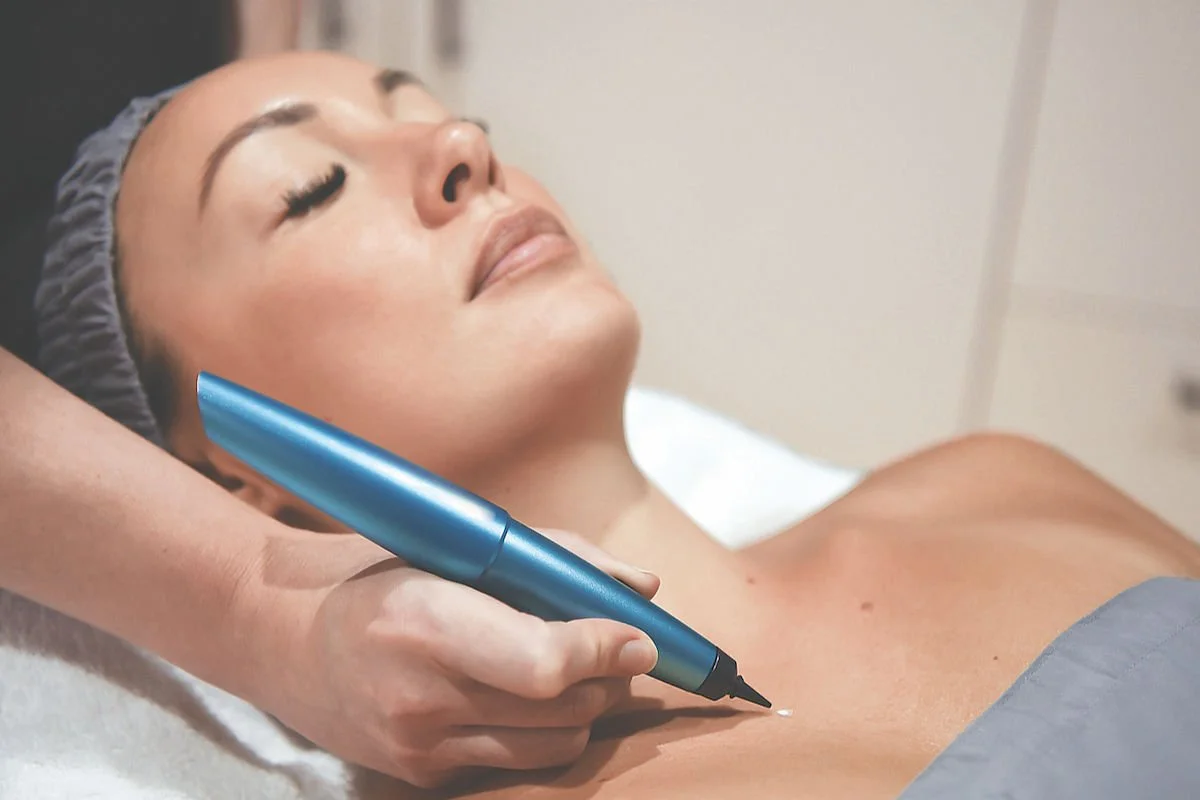
CryoPen Skin Tag & Age Spot Removal in Portadown: What to Expect
Skin tags, milia, warts and stubborn little sunspots are some of the most common reasons patients come to see us, not because they're harmful, but because they can knock your confidence every time you catch them in the mirror. CryoPen is one of the quickest, most precise ways to deal with them, and it's fast becoming one of our most requested treatments at our Portadown clinic.
In this guide, we explain what CryoPen actually is, how it works, whether it hurts, what it can (and can't) treat, and what to expect if you book in for a session.
What Is CryoPen Therapy?
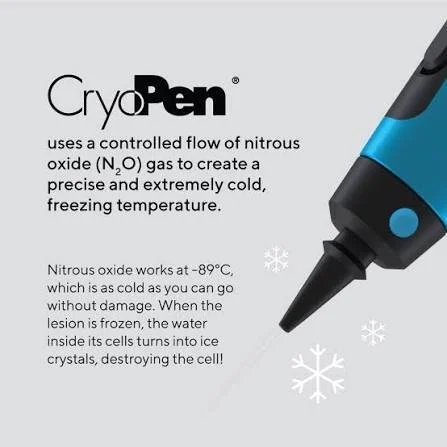
CryoPen is a form of advanced cryotherapy, using a handheld device to deliver a fine, controlled jet of nitrous oxide (N2O) directly onto a benign skin lesion. Unlike the liquid nitrogen sprays sometimes used in GP surgeries, CryoPen works at a lower, more precisely controlled temperature of around -89°C, which gives the practitioner millimetre precision over the treatment area.
This isn't a new idea, cryotherapy has been used in dermatology for decades. What CryoPen offers is a more accurate, more comfortable, and more controlled version of it, designed specifically for treating cosmetic and benign skin concerns in a clinic setting.
How Does CryoPen Actually Work?
The science is refreshingly simple. When the fine jet of nitrous oxide hits the targeted tissue, it freezes the fluid inside the cells almost instantly. This causes ice crystals to form, which rupture the cell membrane and destroy the cell, a process known as cryo-necrosis.
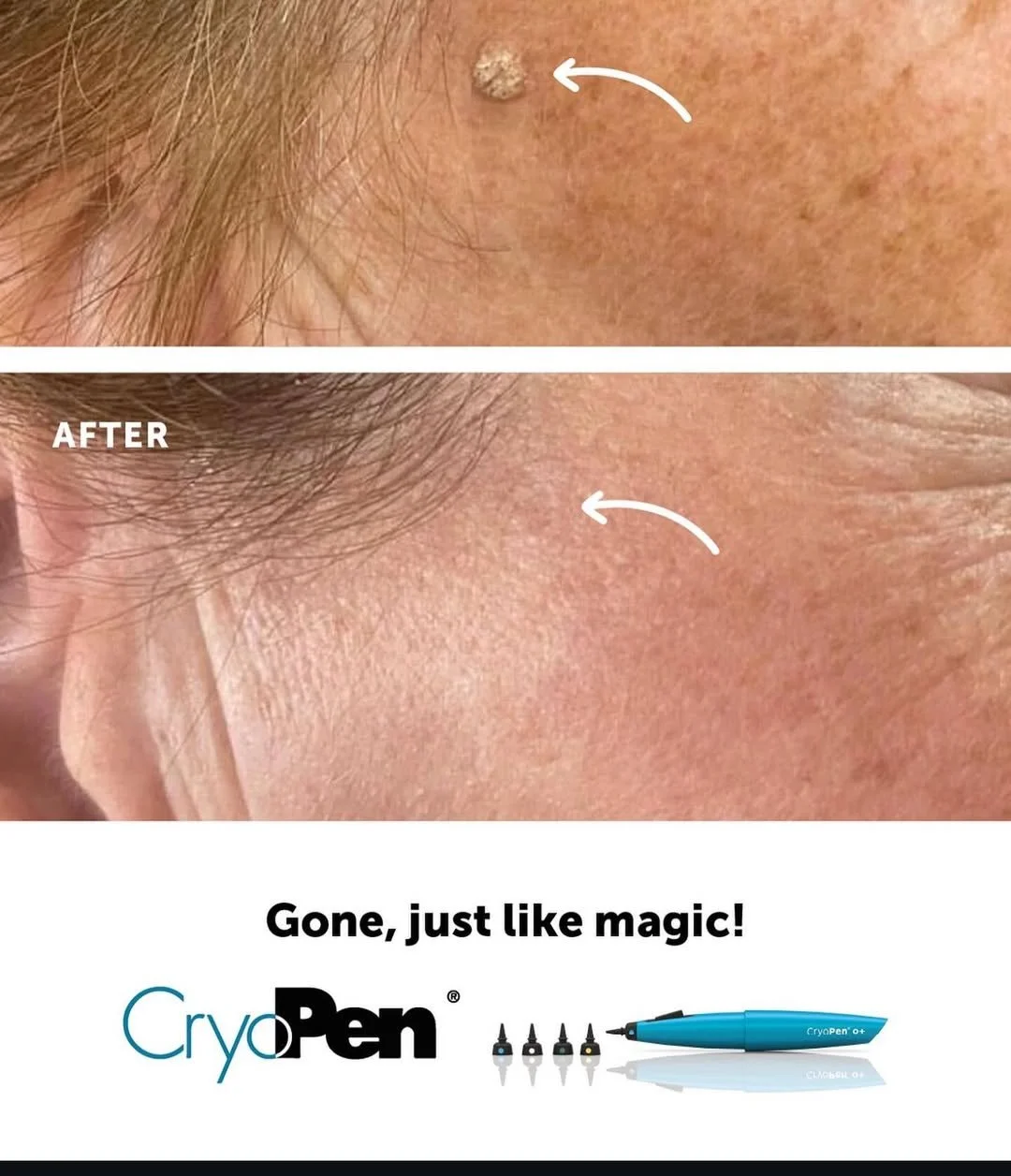
Because the CryoPen delivers such a targeted, focused freeze, there is little to no damage to the surrounding healthy skin. Over the following days, your body does the rest: the treated tissue darkens, dries out, and naturally sheds as your skin heals underneath.
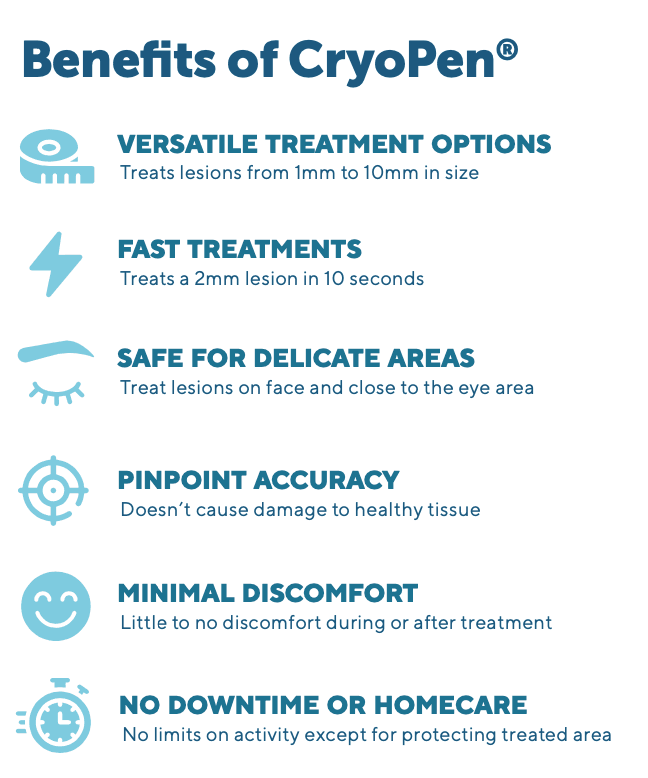
Most treatments take only a few seconds to a couple of minutes per lesion, depending on its size, and there's no need for anaesthetic.
What Can CryoPen Treat?
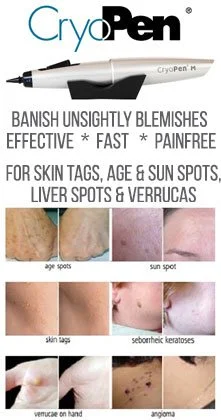
CryoPen is used to treat a wide range of benign skin lesions, many of which are no longer treated on the NHS simply because they're cosmetic rather than medical concerns. Commonly treated lesions include:
Skin tags
Verrucas and warts
Milia
Age spots and sunspots (lentigos)
Seborrheic keratosis
Cherry angiomas
Small benign moles (following assessment)
As with any treatment we offer, not everything is suitable for CryoPen, and that's exactly why a proper consultation matters before we go anywhere near a device.
Does CryoPen Hurt?
We won't pretend there's zero sensation, most patients describe a brief, sharp cold or stinging feeling as the nitrous oxide hits the skin, lasting only a few seconds. It's generally very well tolerated, and because the treatment itself is so quick, any discomfort is fleeting. There's no need for anaesthetic or numbing cream beforehand.
A typical CryoPen appointment looks like this:
Assessment – we examine the lesion to confirm it's suitable for cryotherapy and not something that needs onward referral.
Cleansing – the area is cleaned and dried.
Freezing – the CryoPen delivers a controlled burst of nitrous oxide directly to the lesion, causing it to whiten as it freezes.
Recovery – the area is left to thaw naturally, with no bandaging or downtime required.
How Long Does It Take a Skin Tag to Fall Off After CryoPen, and Does It Scar?
One of the biggest draws of CryoPen is how little disruption it causes to daily life. There's no need to take time off, and most patients return to their normal routine immediately.
In the days that follow, you can expect:
Mild redness or swelling at the treatment site, usually settling within a few hours
The treated lesion darkening before drying out and naturally shedding, typically over one to three weeks
Occasionally, a small blister may form, this is a normal part of the healing process
Scarring is uncommon, and in most cases, the treated area heals cleanly, leaving smooth skin behind.
Is CryoPen Safe?
CryoPen is considered a low-risk, well-established procedure, and is both CE marked and widely used across medical and aesthetic clinics. That said, "low-risk" doesn't mean "no consultation needed." Correctly identifying a lesion before treatment is essential, some skin changes need medical assessment rather than removal, and part of our job is knowing the difference.
This is why, in line with our approach to every treatment we offer, CryoPen at Fresh Aesthetics always begins with a proper skin assessment, not a same-day freeze with no questions asked.
Why Choose Fresh Aesthetics for CryoPen Therapy?
At our Portadown clinic, CryoPen sits alongside our wider skin health and aesthetic treatments, meaning it's assessed with the same medical rigour as everything else we do. Dr Jayne and Dr Brian take a considered, safety-first approach to every lesion, so you can feel confident that what's being treated is appropriate, and what isn't will be flagged and referred on if needed.
If a skin tag, milium, or stubborn little sunspot has been bothering you, it doesn't need to be a permanent feature.
Book a consultation and let's take a proper look.
