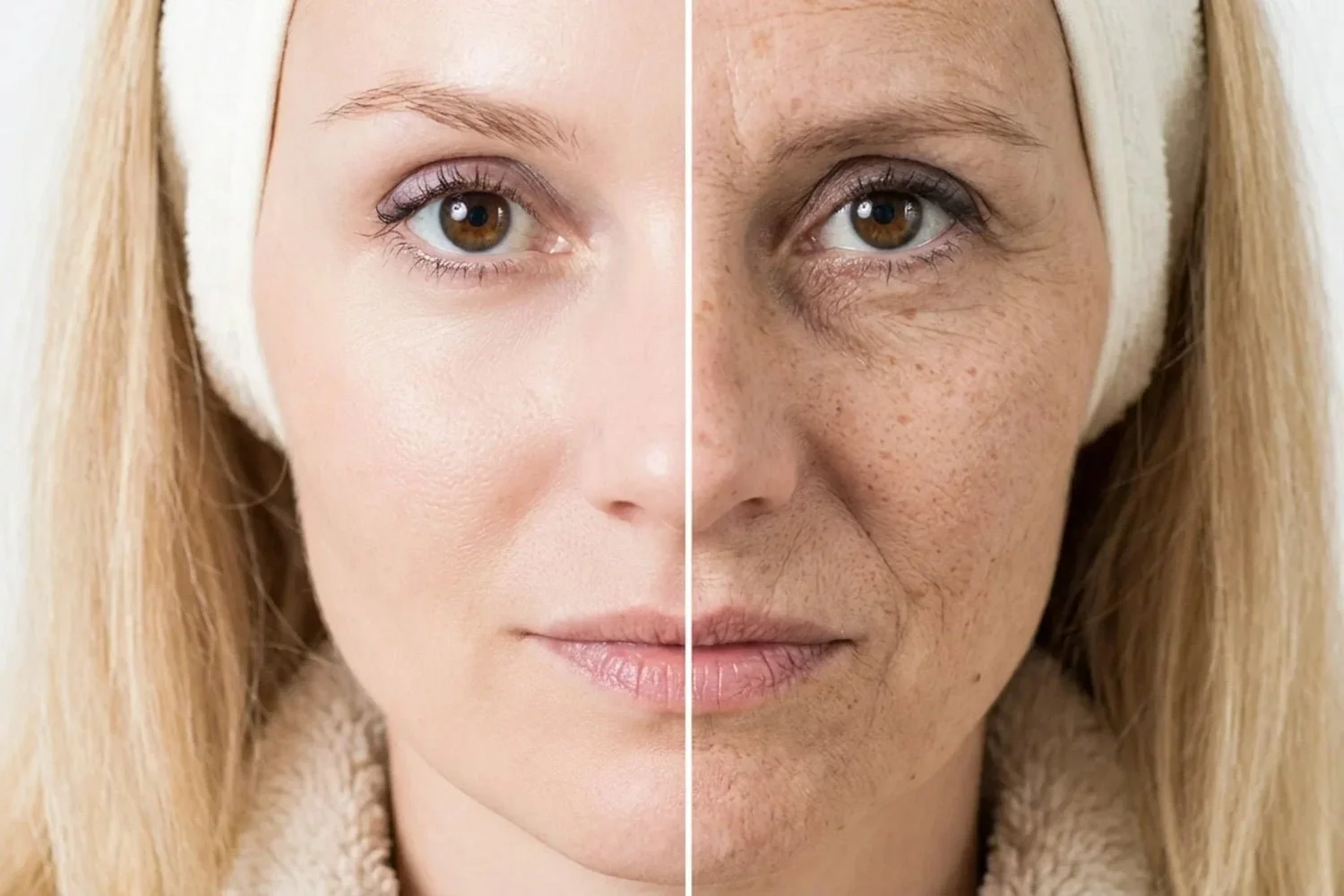
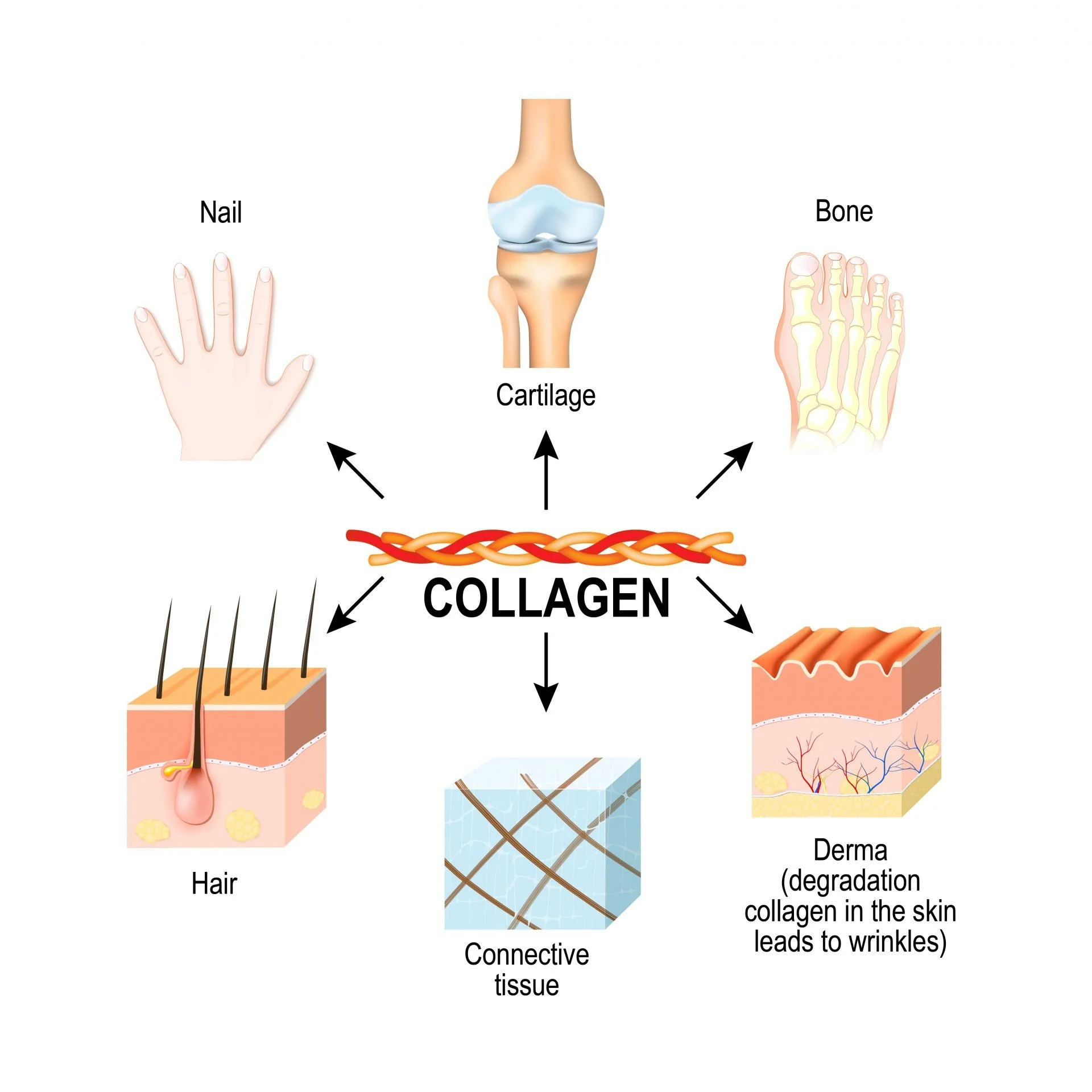
Collagen is the main protein that holds your skin together. It makes up around 70-80% of the layer of skin beneath the surface, and it’s what keeps skin firm, smooth and strong. There’s a lot of marketing around collagen and not much honest explanation, so here’s how it really works and what makes a difference.
In a Nutshell:
Collagen is the scaffolding of your skin. Elastin is the spring that lets it bounce back.
From our mid-twenties we lose around 1% of our collagen every year, and menopause accelerates this..
Sun, smoking, sugar and stress break collagen down faster.
You can’t stop the loss, but you can slow it and stimulate new collagen.
Collagen creams don’t work. Sun protection, retinoids and certain clinic treatments do.
What Does Collagen Look Like?
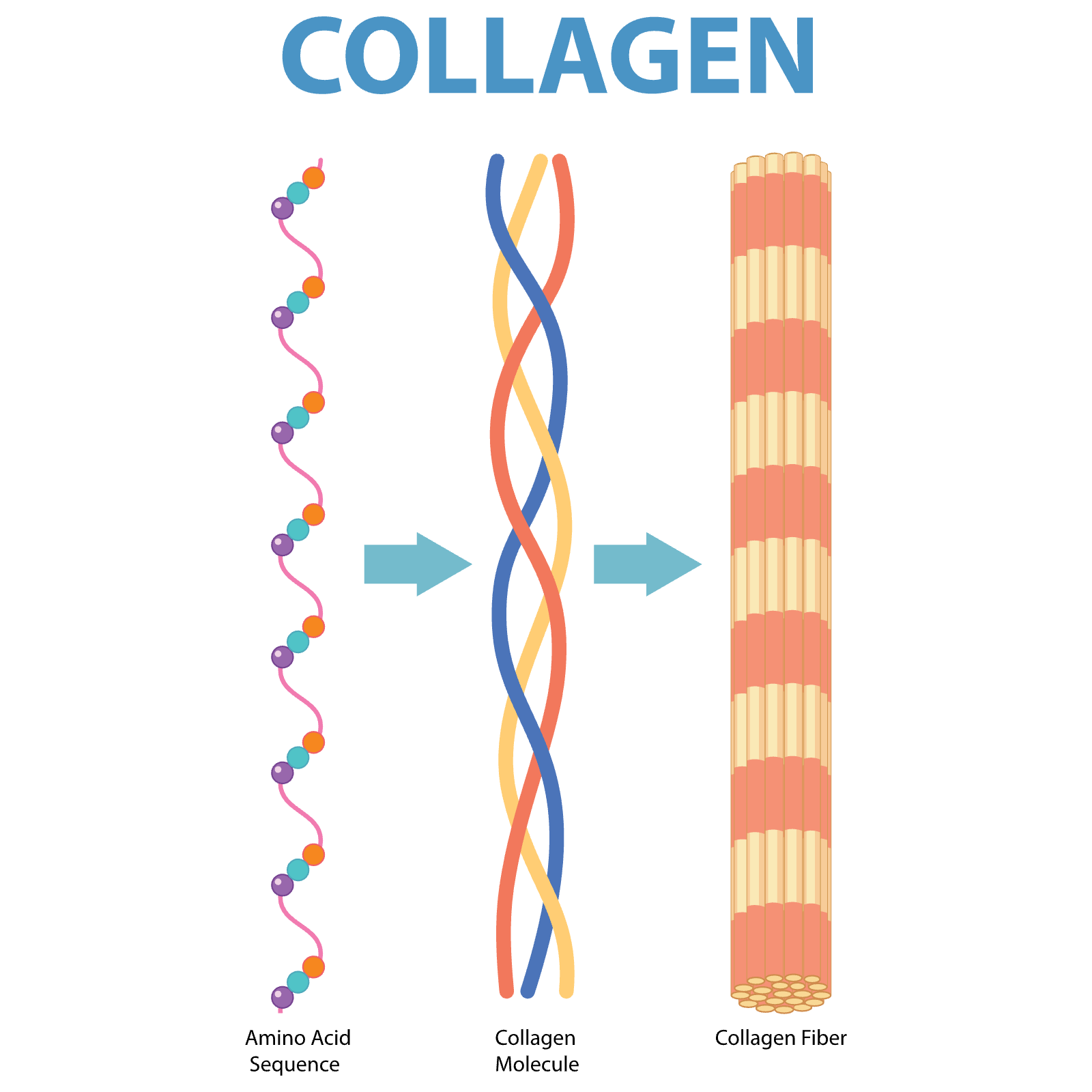
Think of a rope. A single strand is weak, but three twisted together are incredibly strong, and that’s how collagen is built. Three protein chains wind into a tight spiral, and millions of these ropes weave together into a mesh that supports your skin from underneath.
That mesh is what keeps skin plump, firm and smooth. When it thins or frays, skin starts to look crepey, lined and saggy.
How Your Skin Makes Collagen
Collagen is made by cells in your skin called fibroblasts. They need the right ingredients to do it, including protein, vitamin C, iron and copper. Vitamin C is so essential that without it, wounds can’t heal and gums bleed. This is what happens in scurvy, and it shows how much your skin relies on a good supply.
Why Collagen Breaks Down
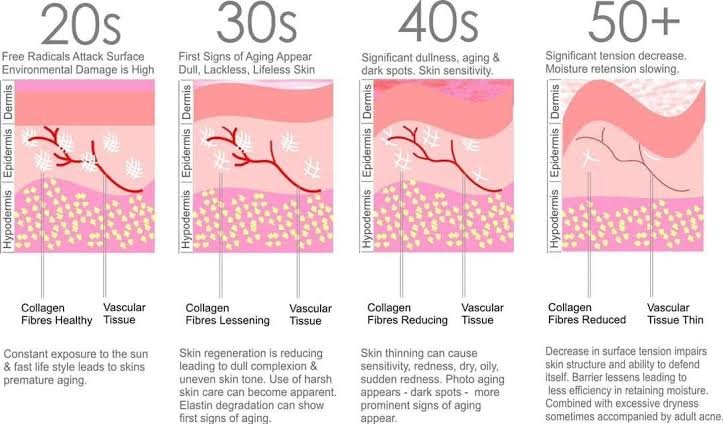
Your skin is always rebuilding itself, making new collagen while clearing out old. Ageing happens when breakdown starts to win. The main culprits are:
🔹 Sun exposure. This is the big one, behind up to 80% of visible facial ageing. UV rays also get through cloud and glass, so it’s an everyday issue, not just a holiday one.
🔹 Sugar. Excess sugar sticks to collagen and makes it stiff and brittle, a process called glycation. Here’s more on how that works.
🔹 Smoking, pollution and stress. All of these trigger inflammation, which damages collagen.
🔹 Menopause. Falling oestrogen can cost women up to around 30% of their skin collagen in the first five years.
Damaged collagen also makes your skin cells less active, so they produce even less new collagen. This is why skin can seem to age quickly once it starts, and why looking after it early pays off.
What About Elastin?
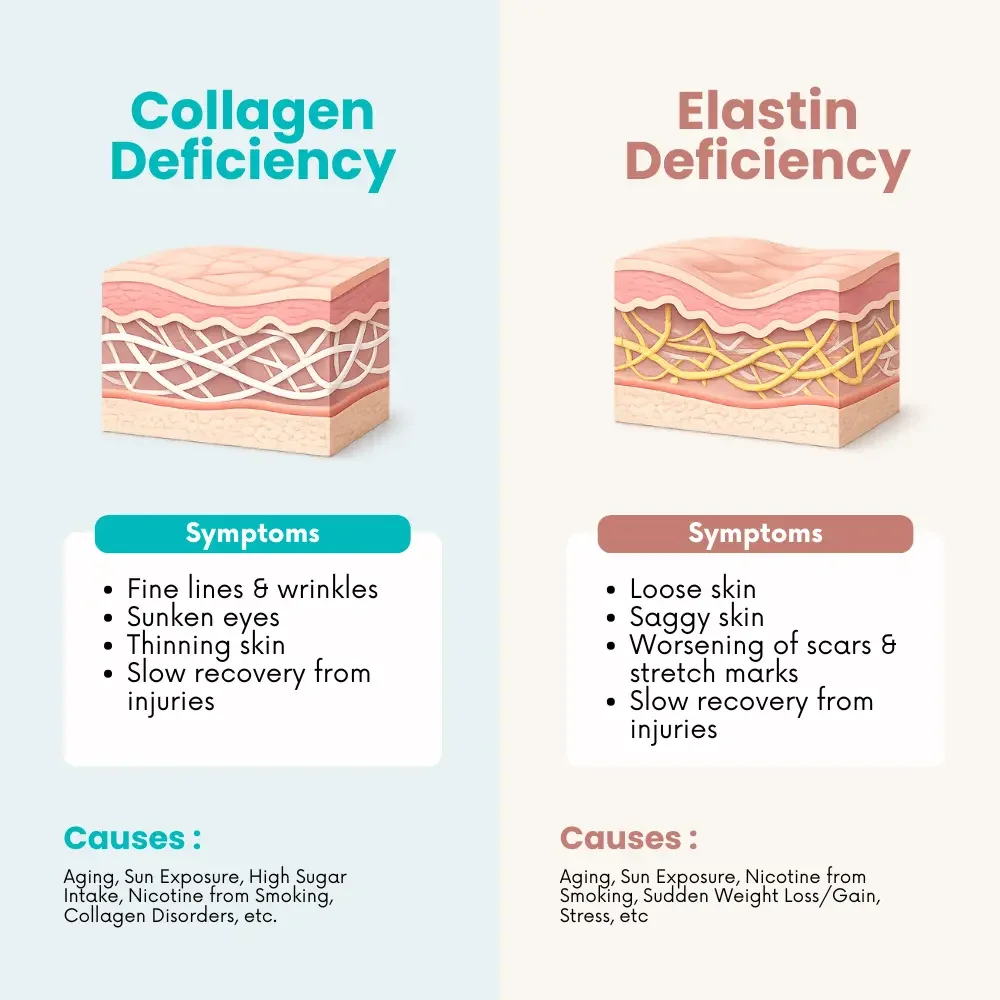
Elastin is collagen’s partner. Collagen gives skin its strength, and elastin lets it stretch and spring back. Skin with good elastin snaps back when you pinch it, while skin that has lost it doesn’t.
Here’s the important bit. Your body makes most of its elastin in childhood and barely replaces it afterwards, so you have to make it last. Sun damage and sugar are its biggest enemies.
How to Build Collagen Back Up
Here’s what works, with the best-proven options first.
Wear SPF 30 or higher every day, all year round, even in Northern Ireland. Nothing protects your collagen better. Giving up smoking comes a close second.
Use a retinoid. Tretinoin has the best evidence for restoring collagen. It’s prescription-only, takes three to six months to show results, and isn’t suitable in pregnancy. More in our tretinoin guide.
Add topical vitamin C and eat well. A vitamin C serum, plenty of protein and fewer sugary foods all help.
Think carefully about supplements. Collagen powders and drinks may give a small boost to hydration, but the research is limited and often company-funded. Treat them as a bonus, not a fix.
Consider clinic treatments. These encourage your own skin to make new collagen:
Sculptra® builds collagen gradually over weeks to months, with results lasting up to two years.
Microneedling and chemical peels gently injure the skin so it repairs itself.
Skin boosters, Profhilo® and polynucleotides improve hydration and help your skin cells work better.
The right plan depends on your skin, and sometimes good skincare is all you need. That’s what a consultation is for. Learn more about regenerative treatments.
Your Collagen Questions Answered
Do collagen creams work?
No. Collagen molecules are too big to get into the skin. Ingredients like retinoids and vitamin C work better because they prompt your own skin to make collagen.
Do collagen supplements work?
Possibly, but the effect is modest. When you swallow collagen, your body breaks it down into small pieces, so it doesn’t arrive in your skin as ready-made collagen. Some studies show small improvements in skin hydration and elasticity after two to three months, but many are small, short and funded by the supplement companies. Treat them as an optional extra, not a replacement for daily SPF or a proven skincare routine.
How long does it take to see results?
Collagen is slow to build. Retinoids usually take three to six months, and treatments like microneedling are done as a course. Sculptra requires a course of 3 treatments, and results are seen over 3-6 months.
Is collagen the same as elastin?
No. Collagen is the structure and elastin is the stretch. Both are damaged by sun and sugar, but only collagen is meaningfully replaced in adulthood.
Want to Know What’s Happening in Your Skin?
At our Portadown clinic, Dr Brian (skin) and Dr Jayne (aesthetics) start every plan with a proper medical consultation and skin assessment. Book your consultation today. Results vary from person to person, and we’ll always give you an honest recommendation.
Fresh Aesthetics | Portadown’s Medical Skin & Aesthetics Clinic
Where advanced science meets real skin results.