
When Less Is More: Why we Sometimes Say No

Young woman holding up her hand with the word “NO” written on her palm, symbolising ethical boundaries, consent, and saying no to unsuitable aesthetic treatments.
Ethical Aesthetics: Why a Good Practitioner Won’t Treat Everyone
For some practitioners, every treatment request ends with an appointment booked and a procedure carried out.
But ethical aesthetic practice does not work like that.
Aesthetic medicine is still medicine. That means every treatment should be carefully assessed based on your anatomy, skin quality, medical history, expectations, and long term results, not simply because you request it.
Sometimes, the safest and most professional thing we can do is say no.
Responsible aesthetics is not about providing treatments on demand, it’s about clinical judgment, honest advice, natural results, and patient safety.
Just because you can, doesn’t mean you should!
Sometimes:
The skin is not healthy enough
The timing is wrong
The treatment is unsuitable
Expectations are unrealistic
More treatment would actually make the outcome worse
And in those situations, saying no is often the most ethical decision we can make.
Why Ethical Practitioners Sometimes Refuse Treatment
A good consultation should never feel rushed or sales focused.
Instead, it should involve honest conversations about:
What is realistically achievable
What may not work
What could look unnatural
What carries risks
Whether another treatment would be more suitable
Whether now is actually the right time
The goal should always be long-term results, not quick fixes.
Patients often tell us they appreciate honesty, even when it is not the answer they wanted to hear.
Ethical aesthetics is about protecting patients, preserving natural beauty, and achieving results that still look good years later.
When We Might Say No to Botox, Lip Filler or Other Treatments
1. It Hasn’t Been Long Enough Since Your Last Botox
One of the most common reasons we may delay treatment is timing.
Anti-wrinkle injections such as Botox generally need proper spacing between appointments (a minimum of 12 weeks).
Treating too frequently can:
Increase the risk of resistance
Lead to an overtreated appearance
Cause heaviness or reduced movement
Affect long-term muscle balance
Natural-looking Botox should soften lines while still allowing expression and movement.
More treatment does not always mean better results.
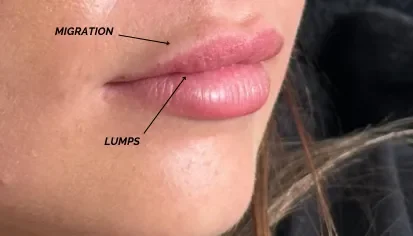
Close-up of lips with migrated lip filler and uneven lumps highlighted, demonstrating complications of overfilled or poorly placed lip filler treatment.
2. Lip Filler Has Migrated
Lip filler migration is extremely common, especially when filler has been repeatedly added over time.
If filler has moved outside the natural lip border, adding more filler usually makes the problem worse rather than better.
This can lead to:
Puffiness above the lip
Loss of definition
Heavier-looking lips
An unnatural appearance
In many cases, dissolving filler first is the safest and most aesthetic option.
Although this can initially disappoint patients, it usually creates a much better long-term outcome than continuing to add volume.
3. Your Lips Already Look Balanced and Natural
Not every lip needs to be bigger.
Some patients already have naturally proportionate lips that suit their facial features beautifully. Adding more filler may start to distort that balance and create a less natural result.
Overfilling can:
Stretch the lip tissue
Increase migration risk
Create heaviness
Change facial harmony
One of the most important parts of aesthetic medicine is recognising when enough is enough.
The best results are often the ones that do not obviously look “done.”
4. What You’re Asking For Won’t Help
Not every concern can be solved with non-surgical treatments.
Sometimes patients request filler, skin tightening, or injectables for concerns that actually require surgery to achieve the result they want.
For example:
Excess skin often needs surgical removal
Heavy tissue may need repositioning
Larger fat deposits may require liposuction
Significant laxity may not improve meaningfully with injectables alone
In these situations, performing a treatment simply because someone asks for it would be misleading and unfair.
An ethical practitioner is honest about what non-surgical aesthetics can realistically achieve, and when a surgical referral may be more appropriate.
5. Your Expectations Are Unrealistic
Social media has dramatically changed expectations within aesthetics.
Filters, editing, lighting, and heavily altered online images can create unrealistic ideas of what treatments can achieve.
Sometimes patients arrive wanting results inspired by:
Face filters
Celebrity images
Edited social media content
Trending “Instagram face” features
Unfortunately, not everything seen online is achievable, or even real.
A responsible practitioner should always explain honestly:
What treatments can realistically achieve
What limitations exist
What may eventually look unnatural
What could require surgery instead
Honest conversations protect patients from disappointment, overtreatment and wasting money!
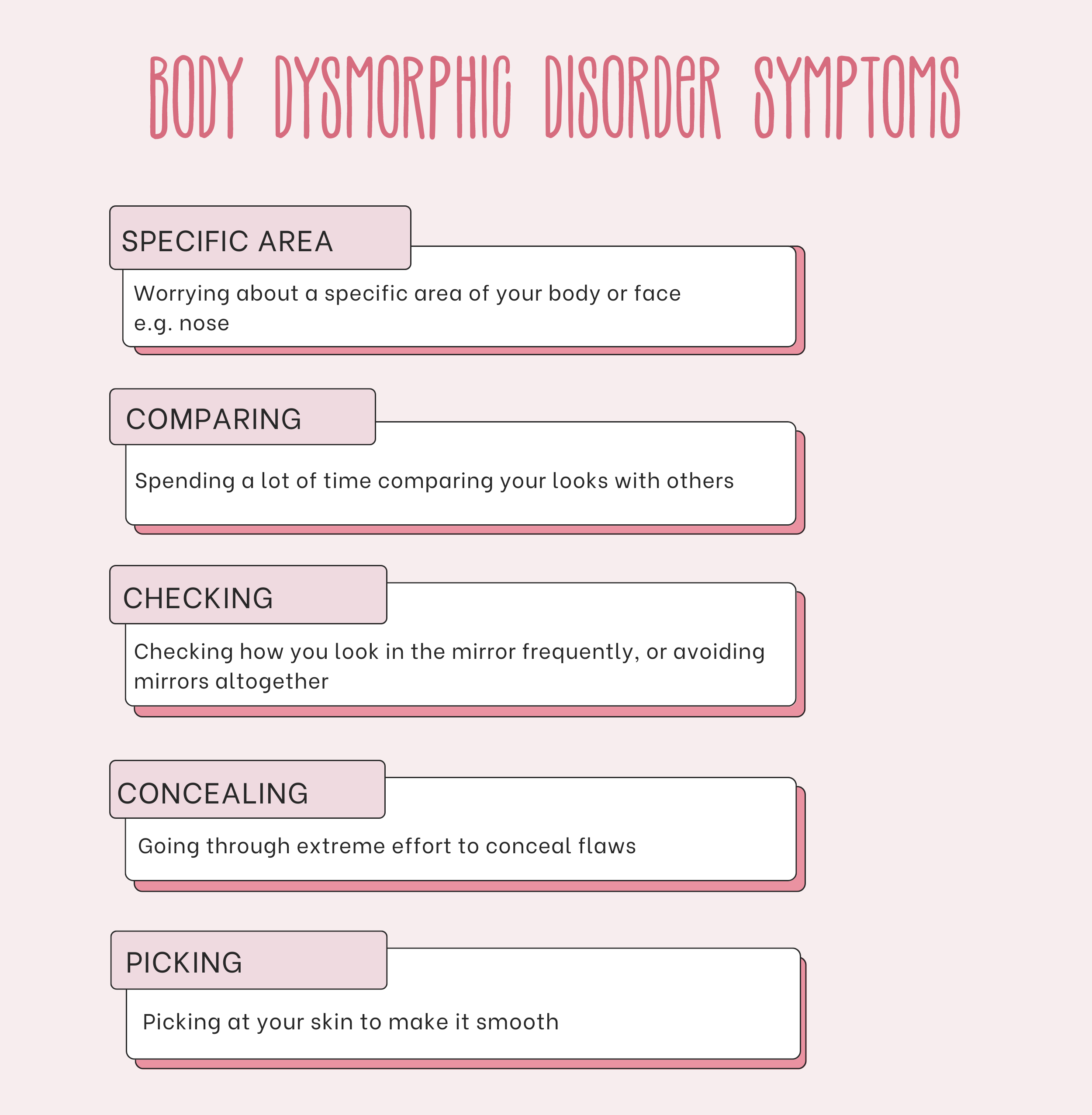
Infographic showing common body dysmorphic disorder symptoms including appearance checking, comparing, concealing flaws, and skin picking.
6. We Suspect Body Dysmorphic Disorder (BDD)
This is an extremely important part of ethical aesthetics.
Body Dysmorphic Disorder (BDD) can cause people to become intensely focused on minor or imagined flaws in their appearance.
Possible warning signs may include:
Obsessing over tiny imperfections
Repeatedly seeking procedures without satisfaction
Constant dissatisfaction with appearance
Unrealistic expectations of perfection
In these situations, more treatment rarely improves confidence long term and can sometimes worsen emotional distress.
Ethical practice means recognising when treatment may not genuinely benefit someone psychologically, even if it could technically be performed.
7. The Treatment Is Not Medically Suitable
Sometimes the answer is no for medical reasons.
Certain medications, allergies, infections, autoimmune conditions, pregnancy, breastfeeding, or underlying health concerns may make treatment unsuitable or unsafe.
This is why medical consultations and assessments are essential before treatment.
Patient safety should always come first.
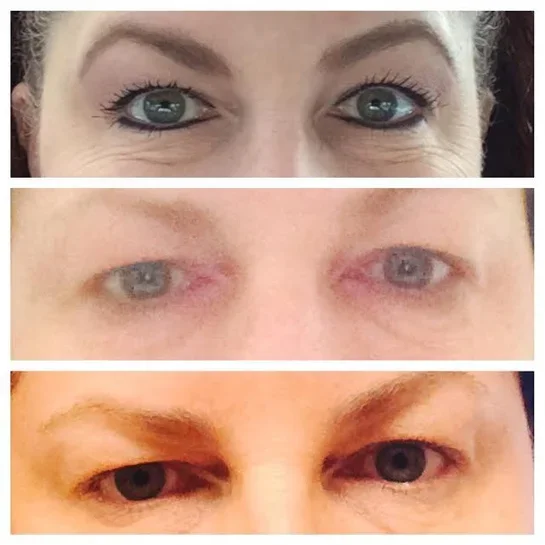
Close-up comparison images showing brow ptosis and heavy eyelids caused by excessive forehead Botox treatment.
8. Forehead Botox Could Cause Brow Drop
Botox is not a one size fits all treatment.
In some patients, the forehead muscles help support the brows. Treating the forehead too aggressively can create heaviness or brow drop.
Careful assessment is essential to:
Preserve natural expression
Maintain brow position
Avoid heaviness
Create balanced, natural-looking results
Good Botox should refresh the face, not freeze it.
9. You Seem Nervous or Not Ready for Treatment
We understand that deciding to have aesthetic treatment can feel like a big decision.
If someone seems particularly anxious, uncertain, or hesitant during consultation, we may recommend taking more time before moving forward.
There should never be pressure to proceed with treatment.
We want patients to feel:
Fully informed
Comfortable
Confident in their decision
Excited about treatment rather than worried about it
Sometimes taking time to think things through is the best decision.
10. It’s Not the Right Time of Year for That Treatment
Certain treatments require more downtime, healing time, or careful aftercare.
We always consider factors such as:
Sun exposure
Holidays
Upcoming events
Current skin sensitivity
Lifestyle and healing time
It’s not necessarily that treatments cannot be done during summer or busy periods, but sometimes timing and preparation matter.
For example, some skin treatments may increase photosensitivity or require stricter aftercare to achieve the best results safely.
In some cases, waiting a few weeks or adjusting your treatment plan can produce a much better outcome.
Sometimes the Best Treatment Is No Treatment
One of the biggest misconceptions in aesthetics is that every concern requires Botox or filler.
Sometimes the better option is:
Medical-grade skincare
Skin barrier repair
Microneedling
Chemical peels
Polynucleotides
Skin health restoration
A gradual treatment plan
And sometimes, the best treatment is no treatment at all.
Patients who stay with us long term usually appreciate this honesty. They understand that ethical advice leads to safer, more natural, and more sustainable results over time.
Because good aesthetic practitioners don’t say yes to everything, they make the right decisions for the patient, even when that means saying no.
