How Stress Affects Your Skin

Stressed woman with eyes closed and mouth open in frustration, showing emotional overwhelm and anxiety, representing how stress impacts skin health, including breakouts, sensitivity, and inflammation, ideal for skincare, stress-related skin concerns, and skin barrier damage concepts.
If your skin seems to flare up during stressful periods, eg breakouts, sensitivity, or just dullness, there’s a physiological reason behind it.
In clinic, this manifests as patients struggling with skin that suddenly becomes reactive, unpredictable, or difficult to manage, despite using the “right” products.
The Skin–Brain Axis: Why Stress Impacts Your Skin
Skin is closely connected to your nervous and immune systems, known as the skin–brain axis.
When stress levels rise, your body activates the hypothalamic–pituitary–adrenal (HPA) axis, increasing cortisol levels. This directly affects your skin by:
Increasing oil production
Weakening the skin barrier
Triggering inflammation
Slowing down healing
From a clinical perspective, stressed skin becomes dysregulated, which is why it often requires a more targeted approach.
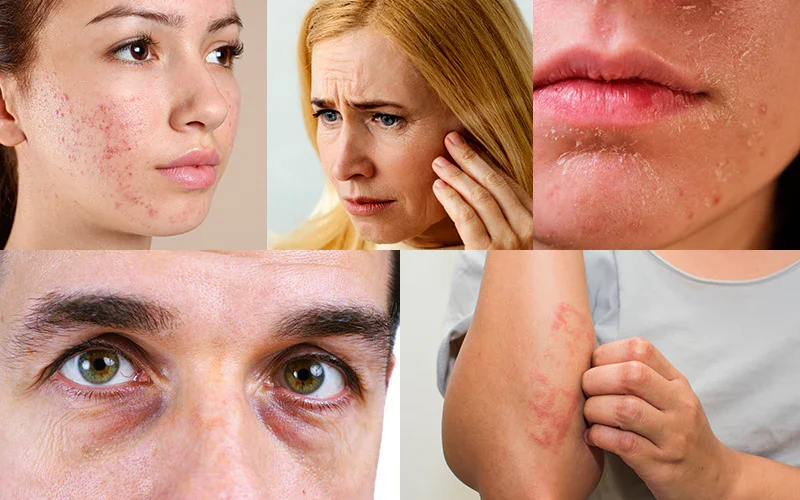
Collage of common stress-related skin conditions including acne breakouts on cheeks, worried woman touching face, dry flaky lips, dark under-eye circles, and eczema rash on arm, illustrating how stress impacts skin health, inflammation, sensitivity, and skin barrier damage.
How Stress Shows Up on Your Skin
Breakouts and Congestion
Stress increases sebaceous (oil) gland activity, making pores more prone to blockage.
This often presents as breakouts around the lower face and jawline, especially in those who don’t usually struggle with acne.
Sensitivity and Irritation
A compromised skin barrier means your skin is less able to tolerate external triggers.
You may notice:
Redness
Stinging
Increased reactivity to products
Dull, Dehydrated Skin
When barrier function is impaired, the skin struggles to retain moisture effectively.
This can leave your skin looking:
Flat
Tired
Uneven in tone
Flare-Ups of Skin Conditions
Stress is a well-known trigger for inflammatory skin conditions, including:
Rosacea
Eczema
Psoriasis
These often require a more advanced, clinical approach to manage effectively.
Premature Ageing
Chronic stress contributes to oxidative stress and collagen breakdown over time.
This can lead to:
Fine lines
Loss of elasticity
A generally fatigued skin appearance
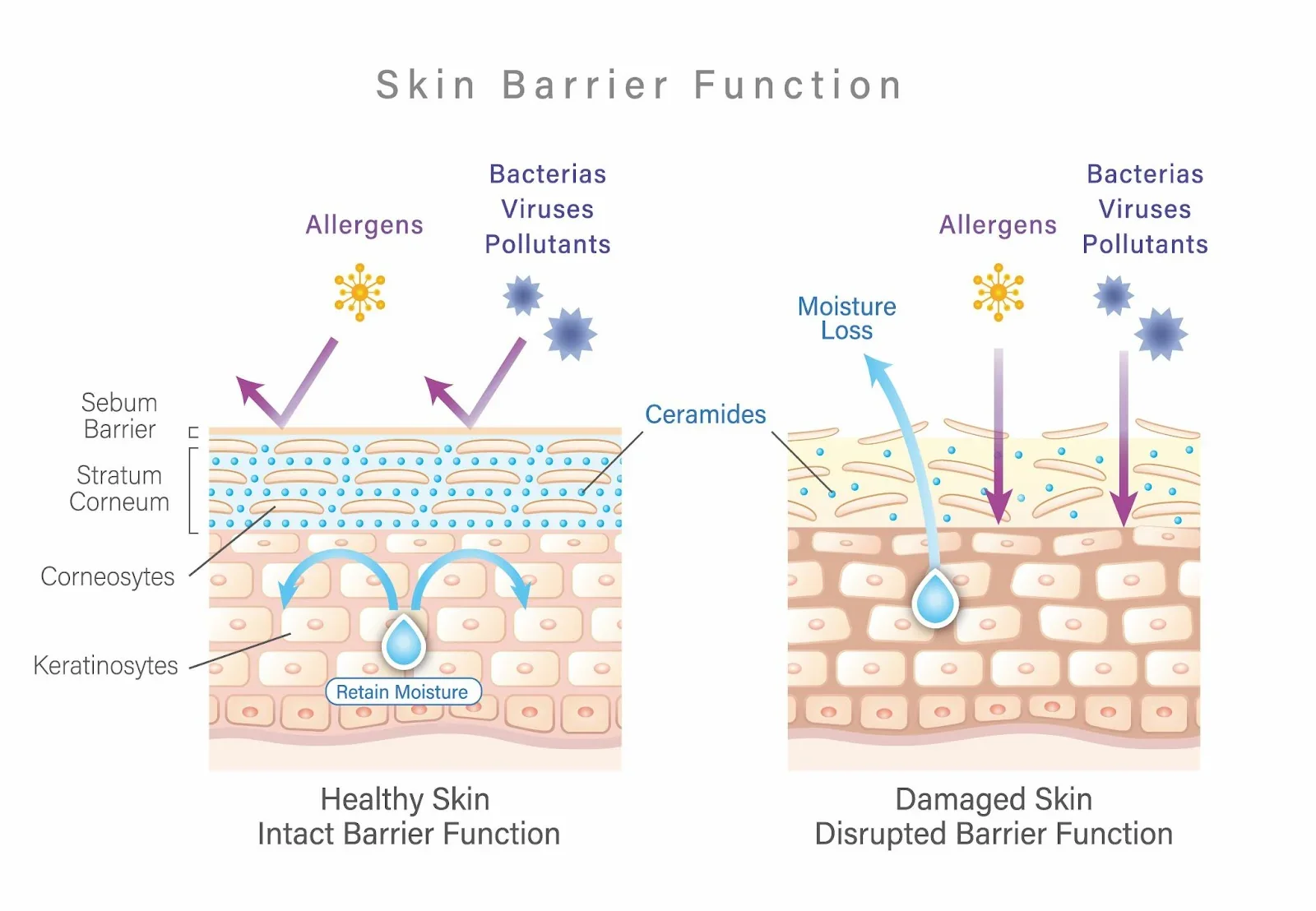
Diagram comparing healthy vs damaged skin barrier function, showing intact stratum corneum with ceramides retaining moisture versus compromised barrier with transepidermal water loss, allowing bacteria, allergens, and pollutants to penetrate, illustrating skin barrier damage and dehydration.
Why the Skin Barrier Is Key
One of the most important factors in managing stressed skin is the skin barrier.
When this barrier is compromised, skin becomes:
More sensitive
More prone to breakouts
Less able to retain hydration
Restoring barrier function is often the first step before introducing more advanced treatments.
How to Support Stressed Skin
Focus on Barrier Repair
When your skin is under stress, a simple, barrier-focused routine is far more effective than layering multiple active products, which can worsen irritation and delay recovery. Stress weakens the skin barrier, leading to increased water loss, sensitivity, and inflammation. Therefore the priority should be restoring hydration and rebuilding the lipid layer.
Focus on ingredients that actively support repair and resilience:
Ceramides strengthen and reinforce the skin barrier
Niacinamide (Vitamin B3) reduces inflammation, boosts lipid production, and helps regulate oil
Hyaluronic acid attracts and retains moisture, improving hydration and skin comfort
Glycerin supports long-lasting hydration and helps maintain barrier function
Panthenol (Pro-Vitamin B5) soothes irritation and supports skin healing
At the same time, it’s important to temporarily reduce overuse of strong actives like exfoliating acids, retinoids, and harsh cleansers, as these can further compromise the skin. With a consistent, minimal routine built around barrier repair, the skin becomes more resilient, less reactive, and better able to respond to treatments over time.
Consider Professional Treatments
When skin becomes persistently reactive or unbalanced, professional treatments can help restore function more effectively.
Options such as:
Chemical peels
Microneedling
Skin boosters
can be tailored to improve hydration, repair, and overall skin quality.
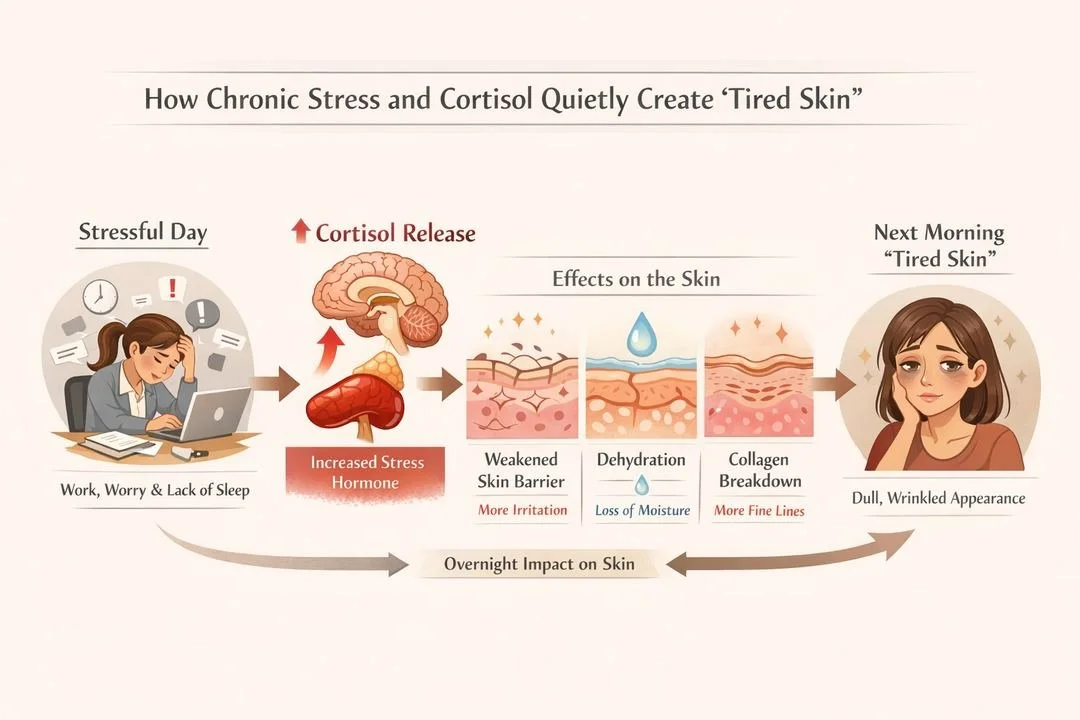
Infographic showing how chronic stress and cortisol affect skin, from stressful day and increased cortisol release to weakened skin barrier, dehydration, and collagen breakdown, resulting in tired, dull, and wrinkled skin appearance, illustrating stress-related skin ageing and damage.
Address Internal Stress
Topical skincare can only go so far if stress levels remain high.
Supporting your skin from within, through sleep, lifestyle, and stress management, is essential for long-term results.
Final Thoughts
Stress doesn’t just affect how your skin looks, it changes how it functions.
If your skin has become more reactive, prone to breakouts, or difficult to manage, stress may be a contributing factor.
With the right approach, focusing on barrier repair, reducing inflammation, and using targeted treatments, skin can be brought back into balance. If you’d like help with this, just contact our Skin Clinic in Portadown, Northern Ireland, ad we’ll be happy to help.