
Skin Health Diet: What to Eat for Healthy, Glowing, Youthful Skin
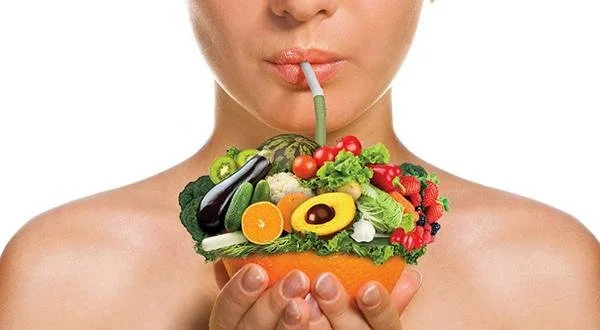
When it comes to achieving healthy skin, homecare and in-clinic treatments play a vital role, but what you eat matters just as much. Nutrition exerts direct effects on skin structure, inflammation, hydration and ageing processes. Research shows that specific nutrients influence collagen formation, antioxidant defences, cell turnover and barrier function, all of which help skin look firmer, clearer and more resilient.
This guide covers science-backed dietary choices that support optimal skin health and explains the medical rationale behind them.
1. Omega-3 Fatty Acids: Nature’s Anti-Inflammatories
Why it matters:
Omega-3 fatty acids (EPA and DHA) are essential fats that the body cannot synthesise and must obtain from diet. In the skin, these fats:
Support the lipid barrier that keeps moisture in and irritants out.
Reduce inflammatory signals that contribute to redness, acne and dryness.
Help moderate conditions like eczema, psoriasis and rosacea.
Top sources:
Oily fish (salmon, mackerel, sardines)
Walnuts, chia and flax seeds
Dietary omega 3’s have been shown to improve hydration and reduce cutaneous inflammation, a major driver of ageing and irritation.
2. Antioxidants: Protecting Skin Cells from Free Radical Damage
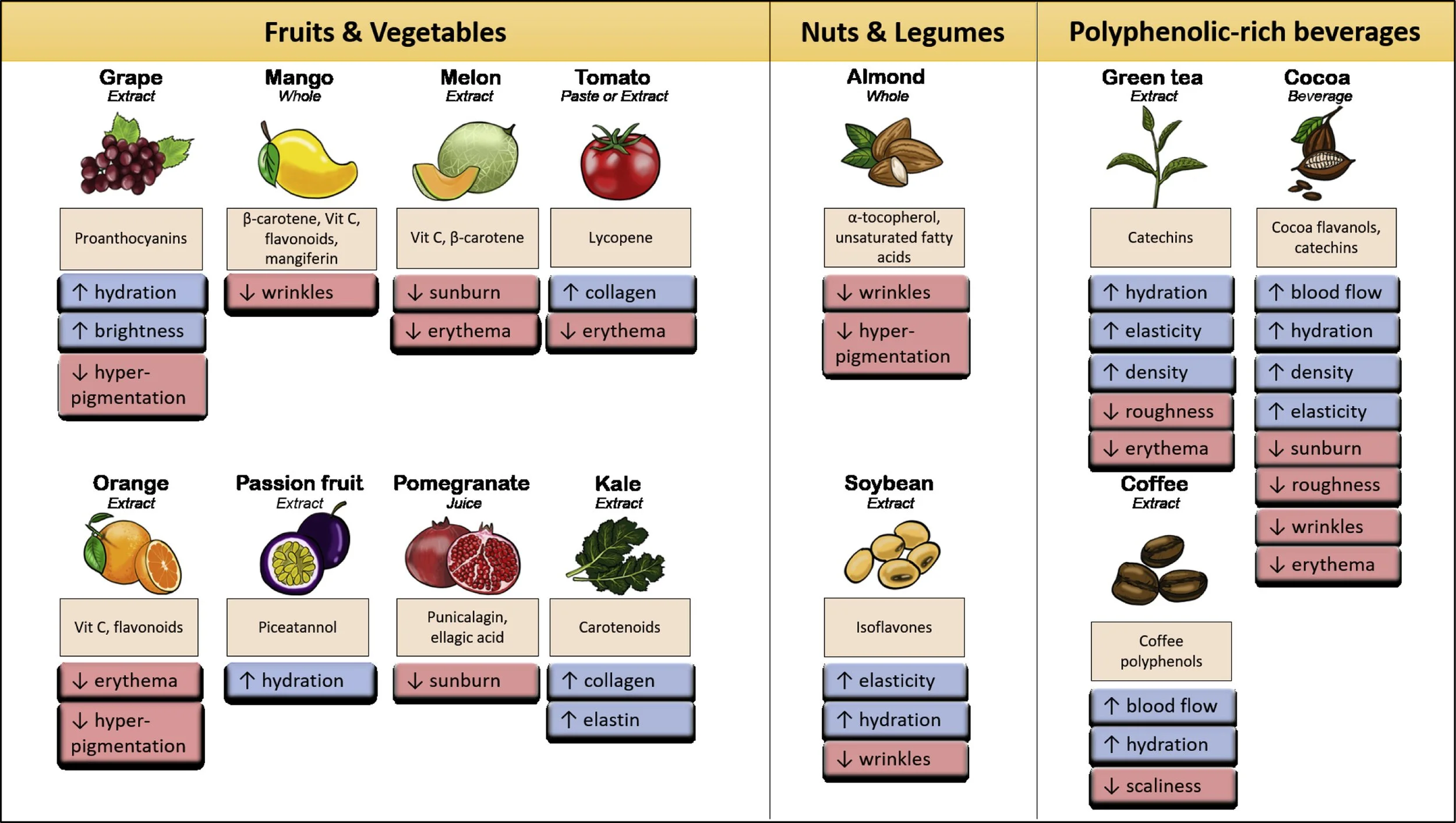
Free radicals from sun exposure, pollution and metabolic processes can damage skin proteins like collagen and elastin. Antioxidants help neutralise these molecules before they accelerate ageing.
Vitamin C
Function: Essential for collagen synthesis (the structural protein that keeps skin strong and firm).
Found in: Bell peppers, citrus fruits, berries, broccoli.
Without adequate vitamin C, the body can’t form stable collagen fibres, leading to weakened skin structure and more visible lines.
Vitamin E
Function: A fat-soluble antioxidant that protects the skin’s lipid barrier.
Found in: Almonds, sunflower seeds, avocados.
Vitamin E reduces oxidative stress in the skin and supports repair of cell membranes. Excessive oxidative stress is linked to premature ageing.
Carotenoids
Function: Plant pigments (beta-carotene, lycopene, lutein) that support UV defence and antioxidant protection.
Found in: Sweet potatoes, carrots, tomatoes, leafy greens.
These compounds integrate into skin tissue and can act like an internal sun shield, reducing photodamage and cellular stress.
3. Protein & Amino Acids: The Building Blocks of Skin
Collagen and elastin are structural proteins. Consuming adequate dietary protein supplies amino acids that skin cells use to repair and regenerate.
Sources:
Eggs (rich in proline and other skin-supportive amino acids)
Legumes and pulses
Lean poultry and fish
Protein intake supports wound healing and cell turnover, particularly important after treatments like microneedling or peels.
4. Zinc and Minerals: Healing and Barrier Support
Zinc plays a role in oil gland regulation, wound repair and anti-inflammatory responses. Diets high in zinc are linked to improved healing of blemishes and reduced acne severity.
Good sources: Pumpkin and sesame seeds, lentils, beans, cashews.
Similarly, selenium and other trace minerals support antioxidant systems and protect against sun-related cellular damage.
5. Hydration and Low-Glycaemic Patterns
Water is essential for maintaining skin moisture and elasticity. Even mild dehydration can leave skin dull and less resilient.
High-glycaemic diets (rich in refined sugars and processed carbs) can trigger insulin spikes and systemic inflammation, which has been linked to faster collagen breakdown and glycation (a process that stiffens skin proteins).
Tips:
Prioritise whole grains, pulses and fibre-rich carbohydrates.
Reduce sugary drinks, pastries and high-GI snacks.
6. Foods to Limit for Skin Health
Just as positive choices improve skin, certain foods may exacerbate inflammation, oxidative stress and hormonal dysregulation:
Highly processed snacks and trans fats: Linked with inflammation and collagen breakdown.
Sugary foods and drinks: Can accelerate glycation and inflammation.
Excess alcohol: Contributes to dehydration and systemic stress.
7. The Gut–Skin Axis: Why Probiotics Matter
Emerging research highlights the gut–skin connection: a balanced microbiome can reduce systemic inflammation that presents in the skin. Probiotic-rich foods (yoghurt, kefir, fermented vegetables) help support gut health and may indirectly benefit skin clarity and immune function.
Conclusion: Dietary Synergy for Better Skin
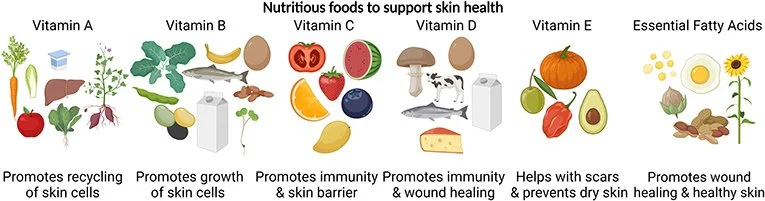
No single food will replace expert treatments or quality skincare. However, dietary choices rich in omega-3s, antioxidants, vitamins, protein and minerals support the biological pathways that keep skin healthy, resilient and youthful. Establishing these dietary habits amplifies the results of in-clinic treatments and elevates skin health from the inside out.
