
Best Treatment for Dark Circles? How Polynucleotides Restore Under-Eye Skin Quality
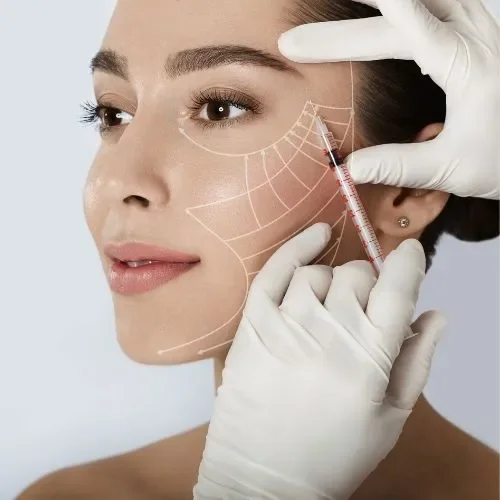
Are you bothered by dark under eye circles and crepey skin? The regenerative power of polynucleotides offer a fantastic, non-surgical option for safely treating this delicate area!
Aging, stress, and lifestyle factors can lead to tired-looking eyes, thinning skin and wrinkles. Polynucleotides, an injectable treatment offered at Fresh Aesthetics in Portadown Northern Ireland, can help smooth and brighten this delicate area.
Unlike dermal fillers that primarily restore volume, polynucleotide injections work at the cellular level to enhance tissue quality, stimulate fibroblast activity, and support long-term skin regeneration.
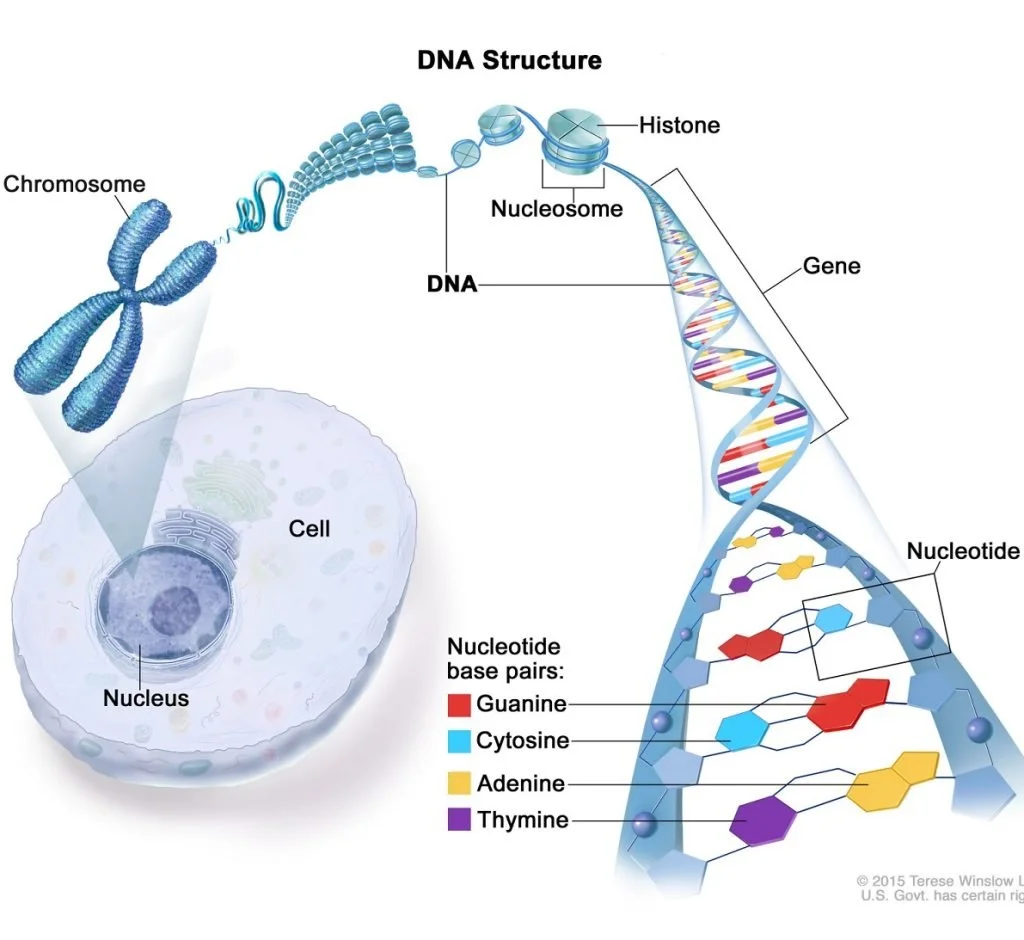
Detailed scientific diagram of DNA structure showing chromosome inside the cell nucleus, DNA double helix, nucleosome wrapped around histones, and nucleotide base pairs illustrating genetic structure and molecular biology concepts.
What Are Polynucleotides?
Polynucleotides are highly purified DNA fragments, often derived from salmon or trout DNA, selected for their biocompatibility and regenerative properties. When delivered via fine needle into the dermis, these molecules act as regenerative biostimulators, driving intrinsic repair pathways rather than simply filling space.
At a cellular level, polynucleotides:
Activate fibroblasts, increasing collagen and elastin synthesis
Improve the extracellular matrix (ECM) to strengthen skin structure
Enhance hydration through intrinsic hydrophilic properties
Modulate inflammation, supporting healing and reducing oxidative stress
Encourage angiogenesis, improving microcirculation and tissue oxygenation
These actions collectively improve skin elasticity, texture, and hydration, key factors in under-eye rejuvenation.
Why Polynucleotides Are Ideal for Under-Eye Rejuvenation
The area around the eyes has some of the thinnest skin on the face, which makes it vulnerable to:
Dark circles from vascular shadows and thin dermis
Fine lines and crepey texture due to collagen and elastin decline
Fragile skin prone to dehydration
Traditional moisturisers and topical creams often cannot address these deeper structural deficits.
Polynucleotide injections target the source of ageing changes by stimulating cellular renewal and improving skin quality and resilience..
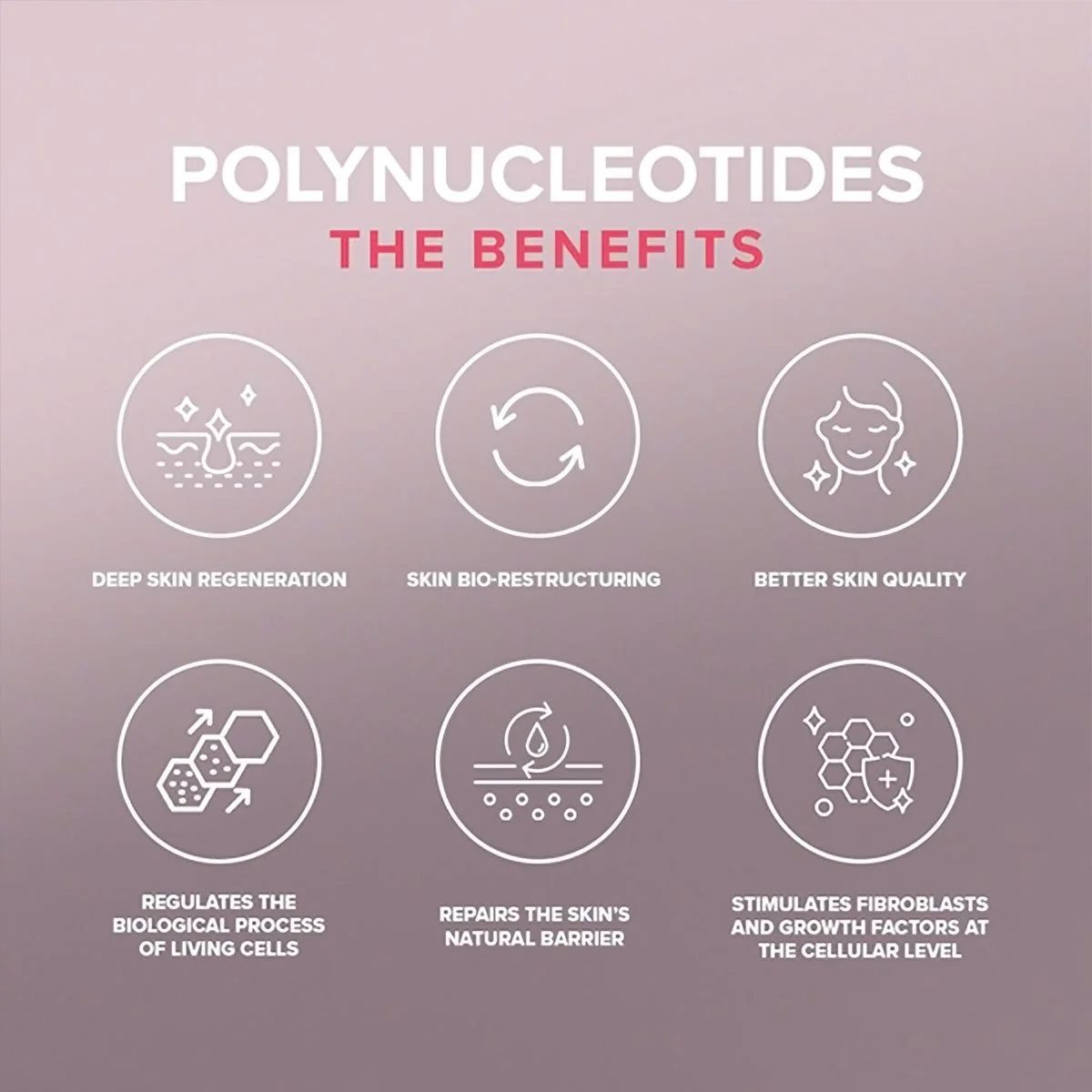
Infographic titled “Polynucleotides – The Benefits” highlighting key skincare advantages including deep skin regeneration, skin bio-restructuring, improved skin quality, cellular regulation, skin barrier repair, and stimulation of fibroblasts and growth factors at a cellular level.
Key Benefits of Under-Eye Polynucleotide Treatment:
Reduction in dark circles through improved microcirculation and dermal thickening
Smoothing of fine lines and crepey texture via collagen and elastin support
Deep dermal hydration through water attraction and enhanced barrier function
Natural, long-lasting rejuvenation without the unnatural puffiness sometimes associated with fillers
The Clinical Strategy: Regeneration Before Correction
A major shift in aesthetic practice is prioritising tissue quality before structural correction. Polynucleotides are increasingly used as a regenerative “primer”, preparing and improving the dermal environment before adjunctive therapies such as:
Laser resurfacing
Microneedling or radiofrequency microneedling
PRP (platelet-rich plasma) or exosome treatments
Dermal filler placement
Botox wrinkle relaxing
This regenerative approach can improve treatment outcomes, support healing responses, and enhance overall longevity of results.
What to Expect From Polynucleotide Injectable Treatment
Consultation & Personalisation
Every treatment begins with a medical assessment to evaluate:
Under-eye skin quality and thickness
The extent of dark circles, fine lines, or crepey skin
Individual aesthetic goals
This personalised treatment planning ensures both safety and optimal outcomes.
Procedure Overview
Preparation: A topical anaesthetic is applied to maximise comfort
Injection: Fine needles or cannulas deliver the polynucleotide solution into the superficial to mid-dermis
Duration: Approximately 10 minutes per session
Downtime: Minimal. Most patients resume normal activity immediately, although mild redness, swelling, or bruising can occur for 24–72 hours
Course of Treatment & Results
Most protocols recommend 2–3 sessions spaced 2–4 weeks apart
Early improvements in hydration and skin texture may be visible within 2–3 weeks
Collagen stimulation and structural dermal changes typically develop over 4–8 weeks
Results commonly last 6–9 months, with maintenance treatments extending benefits
Because polynucleotide injections stimulate biological regeneration rather than acting as a temporary filler, improvements appear progressively and look natural.
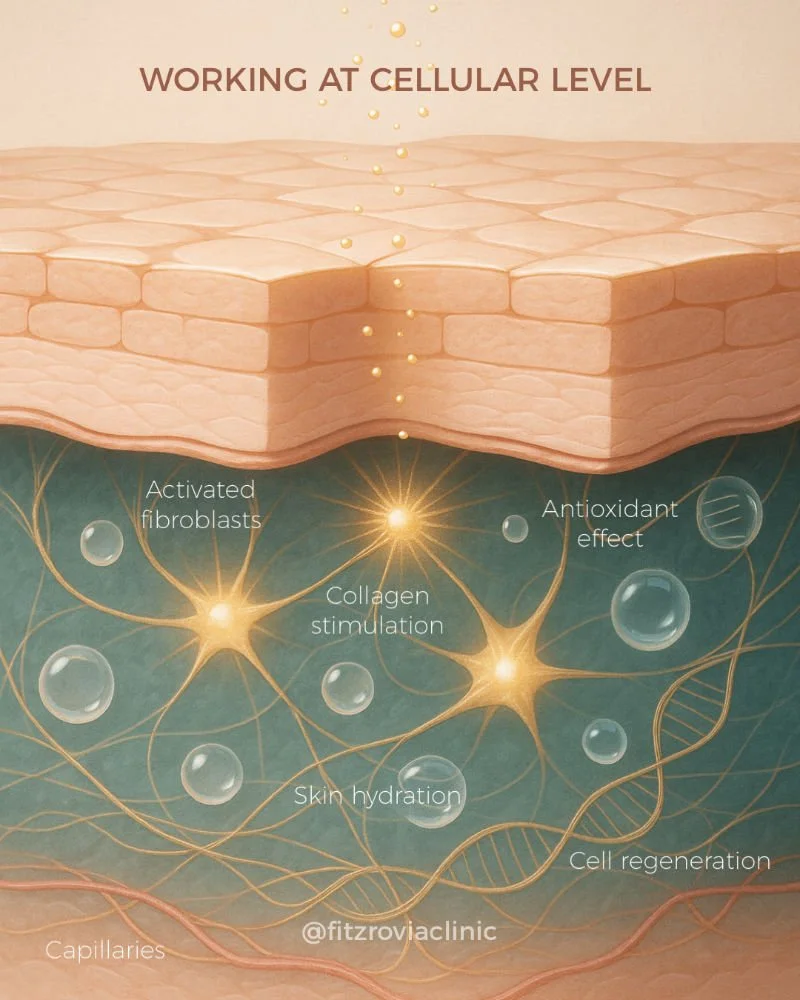
Medical illustration showing polynucleotides working at a cellular level within the skin, demonstrating activated fibroblasts, collagen stimulation, antioxidant effects, improved skin hydration, capillaries, and cell regeneration beneath the epidermis layer.
Safety, Side Effects & Aftercare
Safety Profile
When performed by a medically trained practitioner in a clinical environment, polynucleotide injections have a strong safety profile. They are biocompatible, well-tolerated, and associated with minimal downtime.
Common temporary effects include:
Mild redness
Light bruising
Minor swelling
These effects typically resolve within a few days.
Aftercare Guidance
To optimise results:
Avoid rubbing or pressing the treated area for 24 hours
Apply cool compresses if mild swelling occurs
Avoid strong active skincare ingredients such as retinoids or exfoliating acids immediately post-treatment
Maintain consistent SPF use to protect newly stimulated collagen
Polynucleotides vs Traditional Under-Eye Treatments
Polynucleotide injections differ fundamentally from traditional tear trough filler or surface-based treatments.
While hyaluronic acid fillers restore lost volume in cases of structural hollowing, polynucleotides improve dermal quality, collagen density, elasticity, and hydration. Energy-based devices and microneedling stimulate surface level collagen induction, whereas polynucleotides actively enhance the extracellular matrix and support fibroblast activation within the dermis.
Polynucleotides work with your biology. They encourage your body’s own regenerative processes rather than altering facial contours.
Is Polynucleotide Therapy Right for You?
Polynucleotide under-eye treatment is particularly suitable for:
Early signs of ageing
Thin, crepey under-eye skin
Dark circles related to skin quality rather than volume loss
Patients seeking subtle, regenerative, natural-looking improvement
They may not be appropriate as a standalone solution for significant tear trough hollowing, where structural volume replacement may also be required following skin quality optimisation.
Summary
Polynucleotide treatment represents a medically grounded, regenerative approach to under-eye rejuvenation. By stimulating collagen production, improving hydration, enhancing fibroblast function, and strengthening the extracellular matrix, it addresses the underlying biological processes of ageing rather than simply disguising them.
As regenerative aesthetics continues to prioritise tissue health and skin quality, polynucleotides have become a cornerstone treatment for natural under-eye rejuvenation.
Whether your goal is to reduce dark circles, smooth fine lines, improve elasticity, or strengthen fragile under-eye skin, polynucleotide injections provide a clinically robust, evidence-based solution rooted in cellular regeneration.
